Originally an important trade route for the Tlingit indigenous people, the Chilkoot Trail became the primary gateway to the Yukon goldfields during the Klondike Gold Rush of 1896–99. Today, backpackers are able to retrace the footsteps of the “stampeders” on a well-marked 53 km (33-mi.) trail, that spans two countries, three distinct climatic zones and hundreds of years of history. I hiked the Chilkoot Trail in the summer of 1998, as part of a multi-month trip to Alaska and the Yukon.
Distance : 33 miles (53 km)
Average Time : 3 days
Start / Finish :
- Dyea (near Skagway, Alaska) – Lake Bennett trailhead, British Columbia, Canada.
- See the Parks Canada website for details on getting to and from the trailheads.
Season : May to September.
Maps / Info :
- Origins: Originally an important trade route for the Tlingit indigenous people, the Chilkoot Trail became the primary gateway to the Yukon gold fields during the Klondike Gold Rush of 1896–99. Because of its status as the quickest and cheapest route from the Alaskan coast to the Canadian interior, it became a magnet for thousands of stampeders looking to strike it rich. Arriving in the port town of Skagway, the fortune seekers would load up with “one ton of goods”, the minimum amount required for entrance into Canada (stipulated by the Canadian authorities to prevent unprepared prospectors from starving in the Yukon), before heading inland on the next stage of their arduous journey. For a more detailed examination of the Chilkoot Trail’s history, I highly recommend Archie Satterfield’s Chilkoot Pass: The Most Famous Trail in the North. It contains some wonderful old black and white photos from the gold rush days.


- Trail Map: Click here for an overview map of the trail from Parks Canada.
- GPS: See Traildino and Alltrails for GPX data for the Chilkoot Trail.
- Permits: A permit is required to hike Chilkoot Trail. If you plan on hiking between June 1 and the first week of September. It must be booked in advance via Parks Canada, and then picked up in person at the Trail Center in Skagway, before departure. it must be for the trail can be picked up at the Chilkoot Trail Centre in Skagway.
- Trail Preparation Guide: Click here for a free PDF Hiker Preparation Guide from Parks Canada.


Route / Conditions :
- The trail is well marked and easy to follow from start to finish.
- The weather can be unpredictable. Even in summer, be prepared for cold, wet and windy conditions.
- Throughout the hike, you will pass by historical artifacts, all of which are officially protected by law. Personally speaking, the most fascinating of these was the abandoned canvas boats on top of Chilkoot Pass (see photo below). This same spot offers the premier views of the entire walk.
- The hike up to the pass it the only section of the trail which could be termed difficult. That being said, if you are doing it tough try to imagine what it was like for the heavily laden and often ill-prepared Gold Rushers, some of whom went over this puppy in the middle of winter!


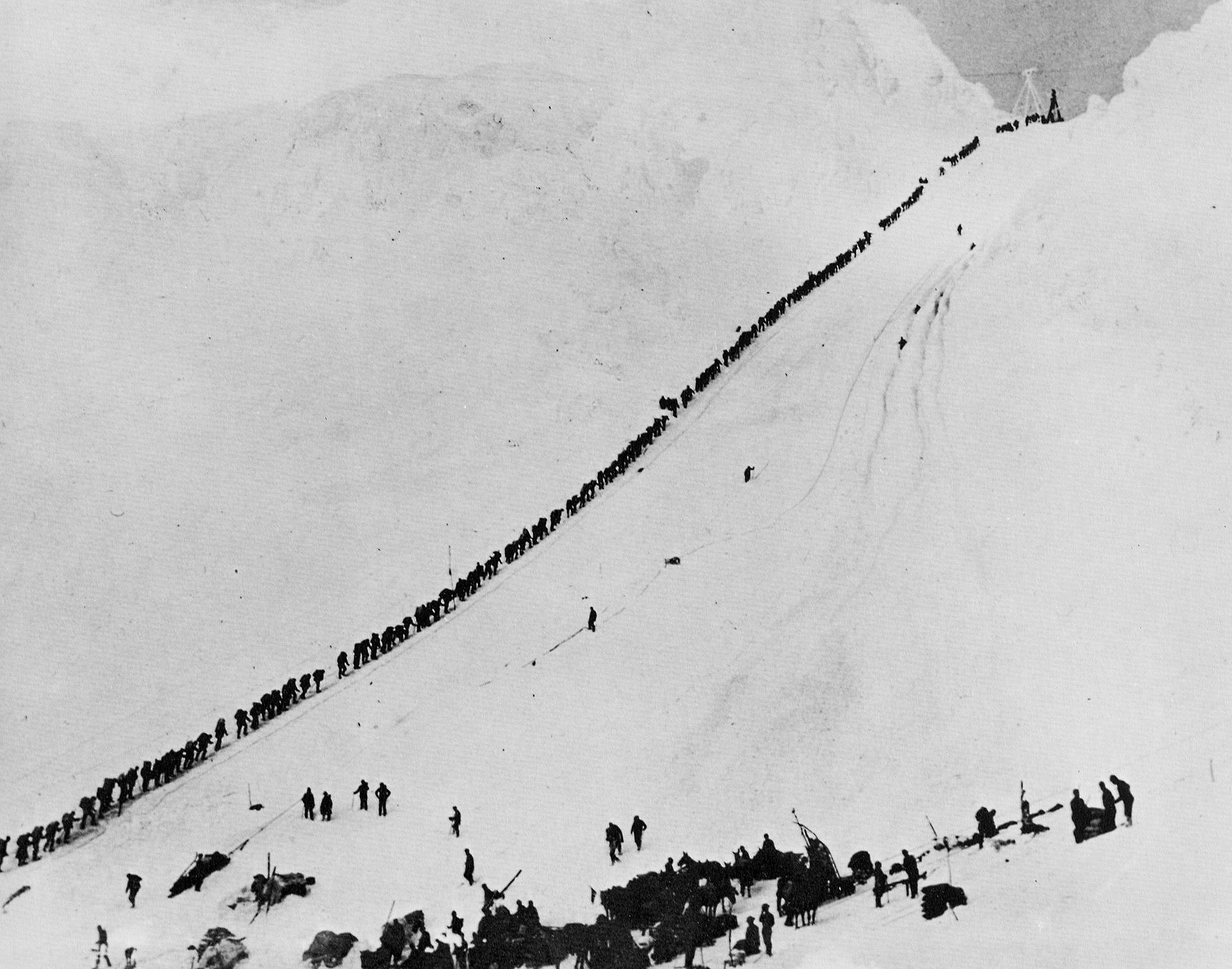
Miners and packers climbing the Chilkoot Pass, September 1898, during the Klondike Gold Rush (photo from Wikimedia Commons).

Sleeping :
- Bring your own shelter. Note that camping is permitted only at designated campsites.
Overview :
- Hiking the Chilkoot Trail is like walking back in time. There is some fantastic alpine scenery along the way, but the impressions that linger most are related to the trail’s history. Walking in the footsteps of the Gold Rushers, I couldn’t help but be amazed at the lengths people will go to in order to strike it rich. Then again, I wonder how many made the arduous journey north just for the pure adventure of it all?
- Returning to Skagway: Upon arriving at the trail’s northeastern terminus of Lake Bennett, the stampeders either purchased, built, or assembled their “knockdown” canvas boats in preparation for the ultimate stage of their quest; a journey down the Yukon River to Dawson City and the goldfields. For present-day adventurers, a railroad rather than a river is the preferred means of onward transport from Lake Bennett – specifically, the historic White Pass and Yukon Route train. The railroad was a feat of civil engineering begun in 1898, with the tunnels blasted through the mountains over a period of more than two years. The two-and-a-half-hour journey back to Skagway passes by mountains, glaciers, waterfalls, and gorges; it is hard to imagine a more fitting way for hikers to finish their Chilkoot Trail experience.
- The Chilkoot Trail is one of 32 featured hikes in my best-selling book (as of 2020 it’s available in six languages), “Wanderlust: Hiking on Legendary Trails.”
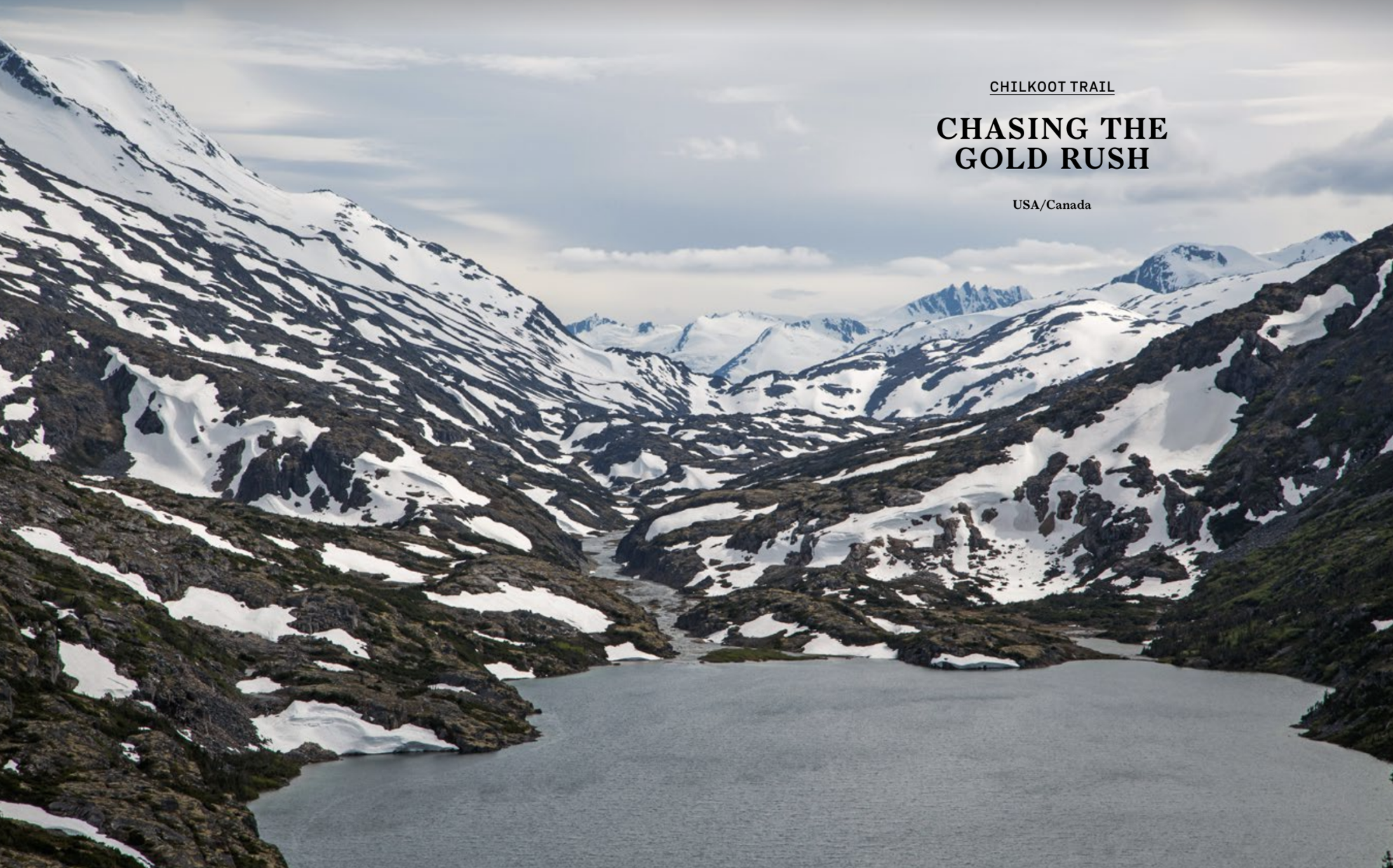
Chilkoot Trail featured image / Wanderlust: Hiking on Legendary Trails.
Discover more from The Hiking Life
Subscribe to get the latest posts sent to your email.