
Pamir-e-tang river
Distance: 52.2 miles (84 km)
Average Time: 4-5 days
Start / Finish:
- Out-and-back to Shimshal village
- As of September, 2008, there was a daily passenger jeep which left Passu bound for Shimshal. This vehicle is often full, in which case you will need to organise a private jeep. In either case, the friendly folk at the Passu Inn can help you organize your onward journey.
Season: June – September
Difficulty: Moderate
Maps / Info:
- Lonely Planet’s, Trekking in the Karakorum & Hindukush contains sketch map and trekking notes which are sufficient for navigation purposes.
- For an overview of the region, try the Swiss Foundation for Alpine Research: 1:250,000 India-Karakoram Topographic Map. Helpful for pre-trip planning, the large scale makes its usefulness for hiking purposes negligible. As with all topographic maps for Pakistan, your best bet is to buy or download them before you arrive.
- A good source of general information on the area is the Lonely Planet Guide Pakistan & the Karakorum Highway.
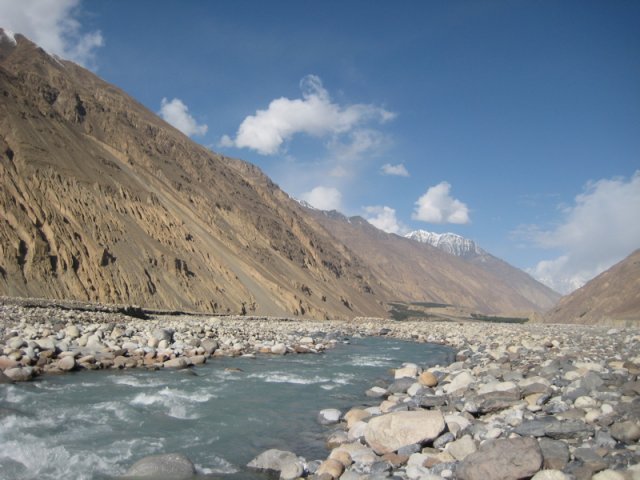
Shimshal River

Passing through moonscape terrain.
Route / Conditions:
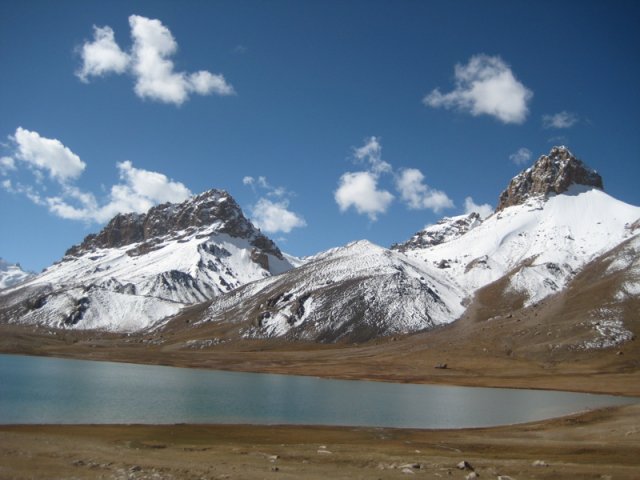
- An out-and-back route which follows the course of the Shimshal, Pamir-e-Tang and Shuizherav rivers, before ascending to the alpine grasslands of the Shimshal Pamir and the herder’s village of Shuwert.
- In regards to water, fill up before leaving Shimshal village. Silty water can be obtained at the confluence of the Shimshal and Pamir-e-Tang rivers’, however it is not until you reach Past Furzeen that a clear, reliable water source can be found. This is a beautiful spot for a break or alternatively to make camp for the night.
- The water flow at Wuch Furzeen is unreliable. The next water source you can count on is to be found at Arbab Purien, which also sports some flat spots for camping.
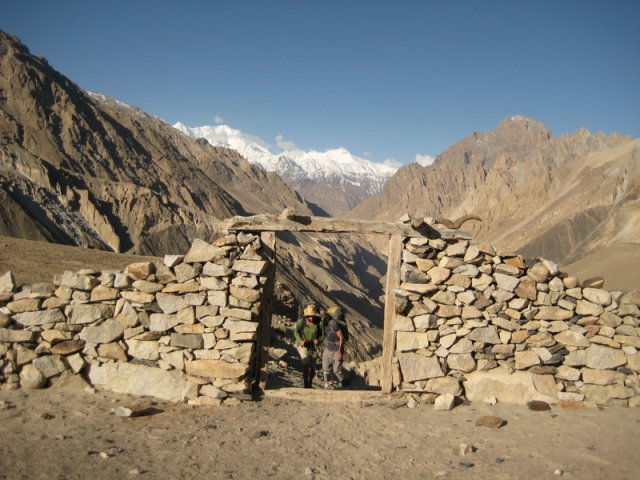


- After Arbab Purien, good water is plentiful.
- On the return journey, once you reach Purien-e-Ben, I would recommend taking the alternative route known as the Uween (pass) trail. Mentioned in the Lonely Planet, the distance is similar to the Tang (gorge) Trail (which you took on the outward journey), however, this high-level option is more challenging and in fine weather (which unfortunately my friends and I did not have) I imagine the views would be spectacular.
- In inclement weather, it is worth noting that there is a hut at Zardgarben in which you can take shelter.


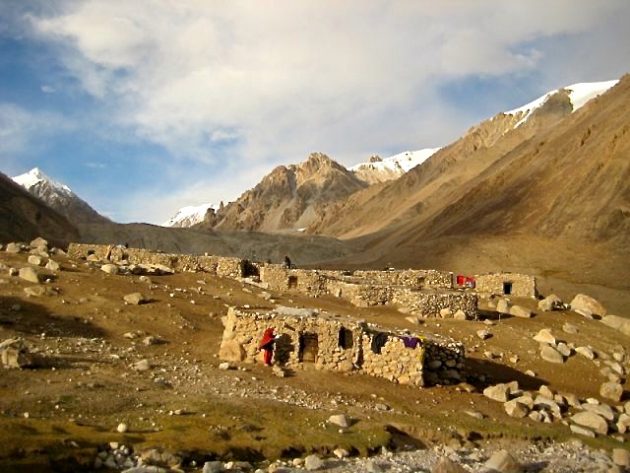
The herder’s village of Shuwert.
Sleeping: Tent
Overview:
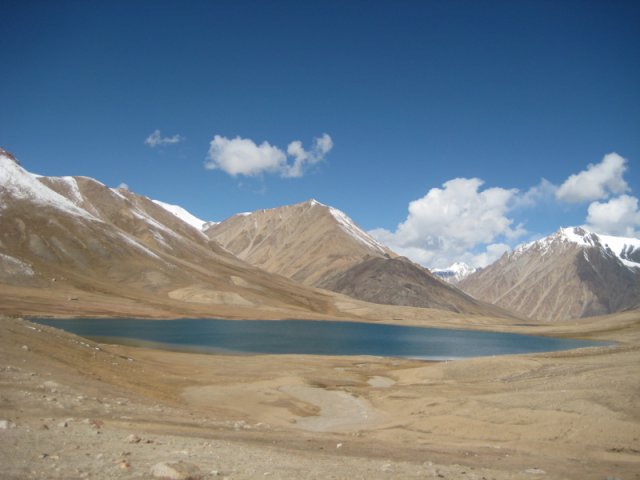
- High pastures, lakes, majestic peaks, incredible hospitality (see below) and the opportunity to witness first hand the herder culture of the Shimshalis, make this an unforgettable trek.


Taking a quick break during a stormy penultimate day.
Dinner with the Shimshalis
There is a timeless quality to the Shimshal Pamir; which can be attributed in equal parts to its incredible natural beauty as well as the fact that no one seems to wear a watch. Situated in the Karakorum Range of the Pakistani Himalaya, the inhabitants of this region are a herding people who’s place of residence is seasonal dependent. Fortunately for myself and Dani, my hiking partner from Switzerland, we happened to arrive at the village of Shuwert just a week before its Shimshali were due to shepherd their livestock down to lower altitudes.
Upon reaching our destination, we gratefully accepted an invitation to join one of the herding families for supper. Chalpindok was on the menu, a traditional Shimshali dish which consists of a type of chapati bread, combined with a thick cheesy sauce and a liquidy butter. Sounds basic, but the food was delicious.
Equally memorable was the kindness of our hosts. Despite the language barrier, we all got along famously, communicating by the tried and true methods of facial expressions, voice inflection, and sign language.
As we said our farewells, the lady of the hut gave us both a large chunk of cheese along with one of the most memorable smiles I had ever seen. The beaming countenance was striking for its genuine warmth, infectiousness and for the unmistakable fact that our host sported no more than three teeth…………..a timely reminder that I was long overdue for a dental checkup upon my return home.

Shimshali herdswoman
Discover more from The Hiking Life
Subscribe to get the latest posts sent to your email.