My fourth book with gestalten publications has just been released. In a nutshell, Wanderlust Himalaya: Hiking on Top of the World, is a 300-page coffee table book that showcases 26 of the finest hikes from the world’s highest mountain range (along with a handful from the adjoining Karakoram Range). The featured trails include established classics such as the Annapurna Base Camp, Markha Valley, and K2 Base Camp Treks, along with lesser-known excursions such as Bhutan’s Jomolhari Trek and Tibet’s Ganden to Samye Monastery Trek.

At approximately 2,400 km long and up to 400 km wide, the Himalaya is a high-altitude wonderland par excellence. Consisting of five countries (India, Nepal, Pakistan, Bhutan, and Tibet/China) and home to more than 52 million people, it features a patchwork of ancient cultures and trade routes, and its mountains and valleys are dotted with precariously perched monasteries and characterful, off-the-beaten-track villages. Wanderlust Himalaya shines a spotlight not only on the region’s natural wonders but also on the cultural, historical, and spiritual elements that help distinguish the Himalaya from other mountain ranges around the world.
As with the other titles in the series, Wanderlust Himalaya was very much a collaborative effort. The book features images from an array of amazing photographers, Florian Bayer provides the illustrations, Bureau Rabensteiner takes care of the map design, yours truly chipped in with a handful of images and all of the written content, and the crack editing team at Gestalten (led by Anna Diekmann) put it all together.

Overview map and a list of featured trails.
From a personal perspective, writing Wanderlust Himalaya was like taking a long series of walks down memory lane. The opportunity not only to revisit some of the extraordinary landscapes but also to reminisce about the equally memorable people I encountered during those journeys. From curious Buddhist monks to incredibly hospitable villagers to stoic nomads, sharing food and conversation with the region’s hardy residents is in some ways as much a part of the Himalayan experience as the incredible mountain scenery. One of the most colourful characters I met during my time in the range was an old German bloke (probably the same age as I am now) on Ladakh’s Markha Valley Trek. Accompanied by an indefatigable donkey, every time the eccentric Teuton would reach one of the trail’s 5,000 m-passes, he’d unload his faithful quadruped, note the strength and direction of the wind, and paraglide from the top. I actually thought he was having me on until I saw him take off into the wide blue yonder.

Markha Valley Trek, “A Journey Through the Heartland of Little Tibet.”
As noted in the introduction, the book also includes multiple treks from the adjacent Karakoram Range. It may not technically be part of the Himalaya (it’s separated by the Indus River at the Himalayas’ northwest limits), but the adjoining mountain chains share much in common altitudinally, environmentally, culturally, and historically. The Karakoram is simply amazing, and the months I spent there in 2000s rate among the best experiences of my hiking life. The following excerpt is from the Snow Lake Trek (aka Biafo Hispar Trek), an extraordinary traverse of the abutting Hispar (49 km) and Biafo (67 km) glaciers, which together represent the world’s longest glacial system outside of the polar regions:
“While Snow Lake is no longer the unknown quantity it was in the time of Conway and Shipton, it remains one of the world’s least visited natural wonders. Less than 200 trekkers a year make the strenuous journey along Biafo and Hispar Glaciers, yet in the Karakoram and Himalaya, the Snow Lake Trek remains second to none when it comes to pure wilderness. No signs. No manicured trails. No tea houses. Just a raw and captivating mountain landscape in which the challenges are more than compensated for by unparalleled rewards.”

p.142-143 »Photo Feng Wei, Wanderlust Himalaya, gestalten 2022 // PHOTO: Melt pond on Hispar glacier, Snow Lake trek, Karakoram Range, Pakistan.
Final thoughts on “Wanderlust Himalaya”
Like many other hikers, I sometimes find myself musing about places I’d love to visit in the future. Far-flung and sometimes closer-to-home destinations that are meant to be experienced on foot. Wanderlust Himalaya is basically an idea generator for one of those dream destinations. As with its predecessors, it’s not a detailed planning guide you’ll take with you out on the trail (Hint: It weighs about 2 kg); it’s aimed at inspiring rather than enabling. Yet hopefully, within its pages, there is something to pique the interest of almost everyone, from weather-beaten vets to wide-eyed newbies.
And with that, I’ll leave you with some more images from the book:

p.84 bottom »Photo David Ducoin, Wanderlust Himalaya, gestalten 2022 // PHOTO – Mongor Dzong (fortress-monastery) in eastern Bhutan (close to the Merak-Sakteng Trek)

p.268-269 »Photo Jamie McGuinness, Wanderlust Himalaya, gestalten 2022 // PHOTO: Larkya La (5,106m), the highest point on Nepal’s Manaslu Circuit.

Bhutan’s Taktsang Monastery Trail (aka Tiger’s Nest Trail).
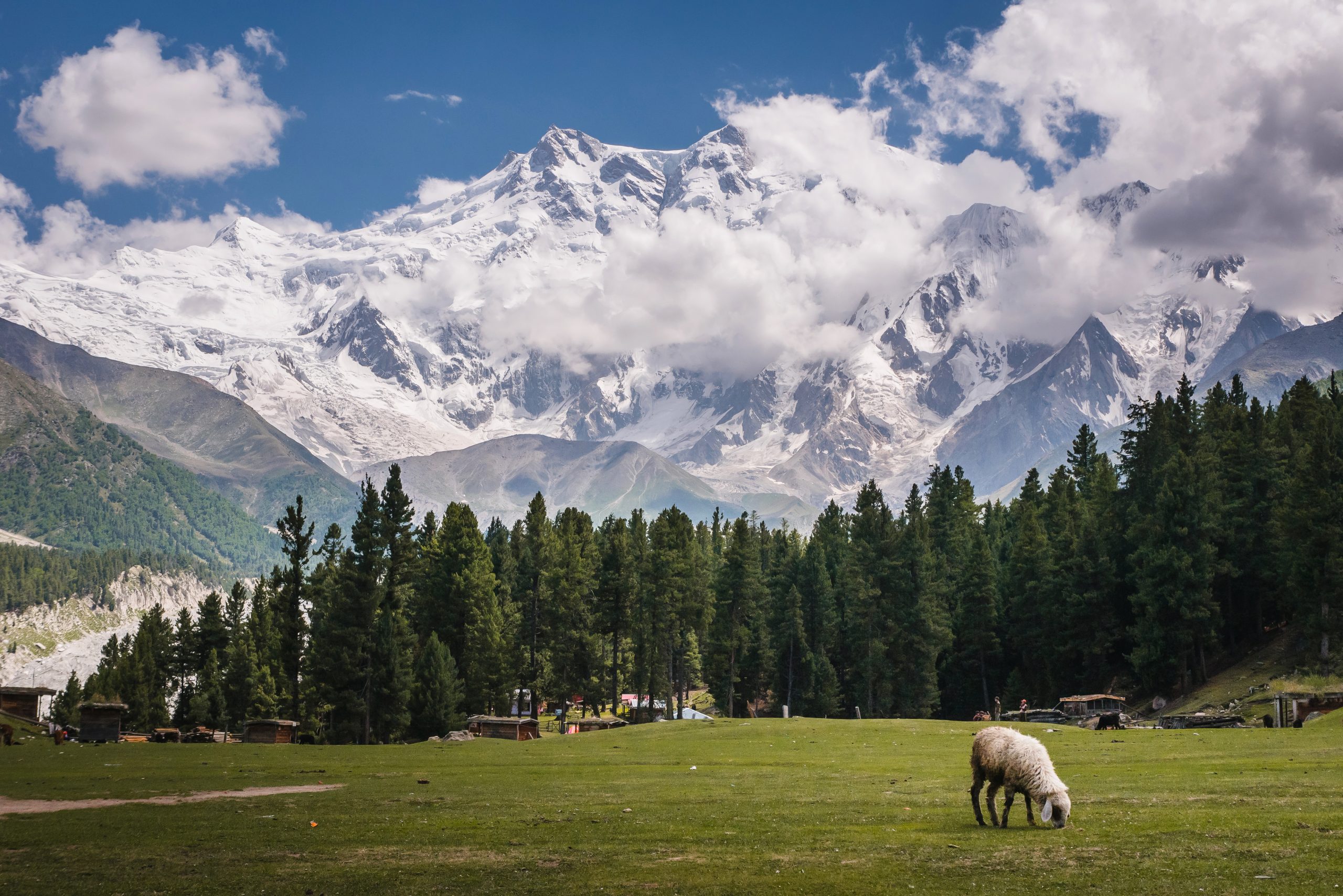
p.177 top »Photo Pakawat Thongcharoen, Wanderlust Himalaya, gestalten 2022 // PHOTO – Fairy Meadows with the mighty Nanga Parbat (8,126 m) looming large in the background (Fairy Meadows and Nanga Parbat Base Camp Trek).

Images from the Phugtal Monastery Trek in Ladakh, India.

Dramatically located in a natural amphitheatre high above the Kyi Chu Valley is Ganden Monastery (est. 1409 / altitude 4,300 m) (Ganden to Samye Trek, Tibet).

The otherworldly serac highway along East Rongphu Glacier (Advanced Everest Base Camp Trek (Tibet)).
The Wanderlust Series (2017-2022)
With the release of Wanderlust Himalaya, the series now numbers six in total. In order of their release, the first five books were as follows: 1. Wanderlust: Hiking on Legendary Trails; 2. The Hidden tracks: Wanderlust off the Beaten Path; 3. Wanderlust USA; 4. Wanderlust Europe, and; 5. Wanderlust Alps. The latter two publications (Europe and the Alps) were put together by Alex Roddie in collaboration with Gestalten. Alex is an accomplished hiker and writer from the UK who is an editor at Sidetracked magazine (Note: The next installment in the series – Wanderlust Nordics – is almost finished and will be released next spring. I should have the introductory post for that one ready sometime in 2034).

Disclosure: This post contains some affiliate links, which means The Hiking Life receives a small commission if you purchase an item after clicking on one of the links. This comes at no additional cost to the reader and helps to support the website in its continuing goal to create quality content for backpackers and hikers.
Discover more from The Hiking Life
Subscribe to get the latest posts sent to your email.
I didn’t know about any of your books. This post is fabulous and introduces us to your marvelous experiences.
2034??? I’ll make a note on my calendar!
Thanks, keep us inspired and informed.
Hi Mary,
Thanks for the kind words. As with the post’s opening lines, the “2034” reference was just poking fun at my own tardiness and shortcomings on the promotional front.
All the best,
Cam
I had the pleasure to contribute photos of my John Muir Trail hike for the first of the Wanderlust books. Thumbing through the pages, I indeed found it to be an idea generator for dream destinations, as you put it. Your writing on the Annapurna Circuit hooked me and I ended up doing that trek as an introduction to the literally breathtaking Himalaya — an appetizer for what could be a lifelong meal. I can’t wait to see this new publication. Thanks for the relentless inspiration, Cam!
Hi Edith,
Always great to hear from Wanderlust alumni! Thanks for the kind words, and glad you had an awesome time in the Himalaya.
Best Regards,
Cam
Hi Cam – thanks for the preview! I loved the first two books in your Wanderlust Series and only recently realized that you had more than two 🙃. I was ordering some of the others and it looks like the US one is out of print. Are there any options to still get that book?
Hi Chris,
Thanks for the message and the support of the Wanderlust series. As far as I know, all the Wanderlust books are still in print. Depending on where you’re located, you can usually pick up the USA edition on Amazon. Alternatively, if you’re in Europe, you can order one with free shipping through the Gestalten website (https://gestalten.com/products/wanderlust-usa).
Cheers,
Cam
Looks like another visual feast has been brought to the table, must be careful not to drool on this stellar publication. Hopefully not all readers will go to these destinations at once. Minor criticism: These destinations have been covered by others, Steve Razetti, Stefano Arditto, Harish Kapadia to name a few.
Who knows if Tibet will ever be open again to individual trekkers and Bhuthan is too expensive for most, so nice showcasing these destinations but they are out of reach.
Hi Eddy,
Thanks for your comment. Regarding your points:
1. I guess most trekking regions around the world have been covered to some extent at one time or another. Nonetheless, hopefully, some folks will enjoy hearing my perspective on the people, culture, history, and landscapes that make the Himalaya such an extraordinary destination;
2. As for Tibet, as someone who was able to experience it independently, it saddens me that it’s no longer possible to strike out on your own. There is nowhere quite like the Tibetan plateau. That said, I still think it’s a worthwhile destination, particularly if travelers/trekkers go with Tibetan-owned companies. In the aftermath of Covid, these local businesses need the support more than ever;
3. You’re right that trekking in Bhutan is more pricey (often considerably so) than other parts of the Himalaya. However, due to the all-inclusive nature of trips there, I wouldn’t say it works out much more expensive than say going hut to hut in the Alps (once you factor in extra food and drink costs), and folks do that all the time.
Cheers,
Cam
I’ve enjoyed the other volumes in the Wanderlust series Cam, so am looking forward to reading this one. One question and one comment…
There are plenty of hikes, and only a few can be included, but I’m interested in the omission of the Snowman Trek in Bhutan, and the Kanchenjunga Circuit in Nepal.
The Snow Lake Trek looks amazing but talking to operators recently it isn’t really commercially viable to run trips anymore. Climate change has led to some pretty enormous crevasses, making it difficult for groups to complete the trek. Unfortunately I suspect this will impact a number of other treks in the region sooner than than later (see the idea to move Everest Base Camp…)
Hey Jonty,
Thanks for your comment and support. Regarding the omissions you mentioned, we featured the Snowman Trek in the second book of the series (The Hidden Tracks). The Kanchenjunga Circuit would have been a good option, but ultimately, it was decided to go with the Goecha La Trek on the Indian side of the mountain.
As for the Snow Lake Trek and many other trips in the region, as you say, moving forward climate change is going to have an increasingly larger impact. I haven’t recently spoken to any trekking agencies working in the area, but from what I can gather online, it seems like trips are still running along Biafo/Hispar (though crevasses are a constant/growing concern, and many groups have to return to the starting point in Askole).
Cheers,
Cam
With a little regret I’ve just finished reading my copy of Wanderlust Himalaya: Hiking on Top of the World. What an incredible book Cam, well done!
The writing is beautiful, the photos are phenomenal, there is just the right amount of information, and the pen sketches are a lovely touch.
I’ve read a number of coffee table hiking books, and this is a cut above most, a quality product all round. Look forward to the next one!
Hey Cam,
I have really enjoyed reading your new book! It’s is beautifully written and convinced us to finally plan our trip to Nepal.
We were really interested in the Bonustrack “Dho Tharap Loop” (p. 252, German Edition)
from the Phoksundo Lake Trek but unfortunately it seems hard to find information online. Is it possible to do the extraloop without camping gear? Are there lodges/teahouses too? We would like to do the trek independently and the only information I have found so far was from commercial travel agencies offering guided Camping treks….
Maybe you can help us out a little or point out where you found more information on the trek? Thanks a lot in advance.
Kind regards from Germany
Kornelia
Hey Kornelia,
Thanks for your support and kind words. Glad you’ve enjoyed the book!
Regarding the Dho Tharap Loop, unlike the Phoksundo Trek, you’ll need to carry camping gear if you plan on going independently. Here’s a quick overview: From Dunai, head southeast to the small village of Tarakot. From there, you’ll soon swing northeast up the Tarap Valley. Follow the valley all the way to the village of Dho Tarap. From this point continue northwest past the Thaksi campsite, and then head in a general westerly direction over Numa La and Baga La (the passes mentioned in the Bonus Track section), before eventually linking up with the Phoksundo Lake Trek at Ringmo. Hope all that makes sense!
Best of luck!
Cam
Hey Cam,
thanks a lot for your reply and providing more helpful information.
Yes it makes sense, thank you.
All the best
Kornelia